
Duplicate properties cleaned out
The challenge they faced
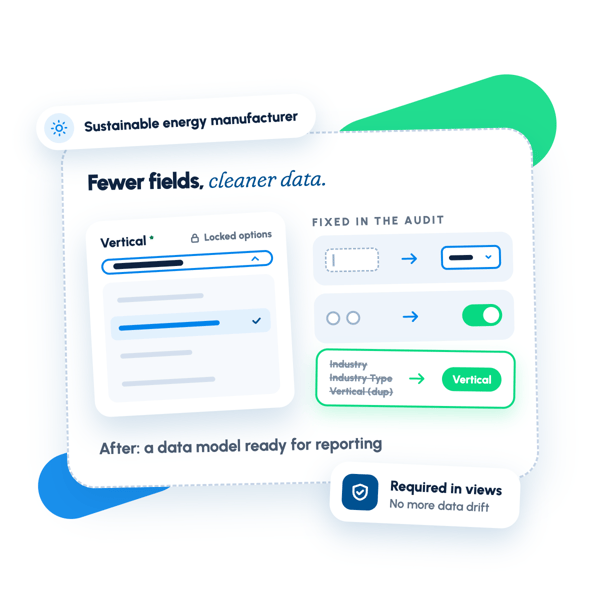
As a sustainable energy technology manufacturer, the team had accumulated duplicate and misplaced custom properties across their HubSpot instance over time. Properties like Vertical, Industry, and Industry Type existed on multiple objects without clear ownership, creating confusion about which field to populate and causing data quality issues downstream. The team recognized that their data model needed stabilization before they could confidently use it for reporting and workflow automation.
The strategy we mapped
The team needed to understand what custom properties existed across their HubSpot instance, how they were being used, and whether they were fit for purpose. We started by auditing the full landscape of custom properties across all objects to identify duplicates, misplaced fields, and type mismatches that could cause data quality issues downstream. This clarity made it possible to plan a remediation approach that would tighten the data model without disrupting active workflows.
The solutions we executed
What changed after the engagement.
The client's custom property landscape is now clean and rationalized. Duplicate properties have been consolidated, misplaced fields moved to their correct objects, and type mismatches corrected–converting text fields to dropdowns, radio selects to toggles, and similar adjustments where needed. The data model now supports consistent capture through required properties in custom views, and vertical taxonomy has been standardized across Leads and Deals with locked-down options to prevent future drift. The client can now rely on their CRM as a dependable foundation for reporting and automation as the organisation scales.
Want results like these?
Tell us where your revenue engine is stuck — we'll map the fix in one call.