
Contacts sorted by brand, automatically
The challenge they faced
A natural meat producer, the team operated multiple brands but lacked the organizational structure in HubSpot to manage them effectively. Their contacts were not segmented by brand, workflows were not automated, and they could not reliably track which brand each prospect belonged to. This fragmentation made it difficult to run targeted email campaigns, nurture leads with brand-specific messaging, or measure performance by brand. The team needed to modernize their HubSpot setup to support their multi-brand business model and enable more strategic marketing.
The strategy we mapped
The team needed to modernize their HubSpot environment to support evolving business requirements. We structured the engagement to first understand their current setup and identify gaps through focused consultation, then move into targeted implementation work that addressed their specific operational needs.
The solutions we executed
We completed a series of implementation updates to their HubSpot instance, configuring the system to align with their workflows and business processes. This work encompassed the technical adjustments required to make their platform function as intended for their team's day-to-day operations.
Throughout the engagement, we met with stakeholders to discuss challenges, review objectives, and refine the approach based on what we learned about their environment and priorities.
What changed after the engagement.
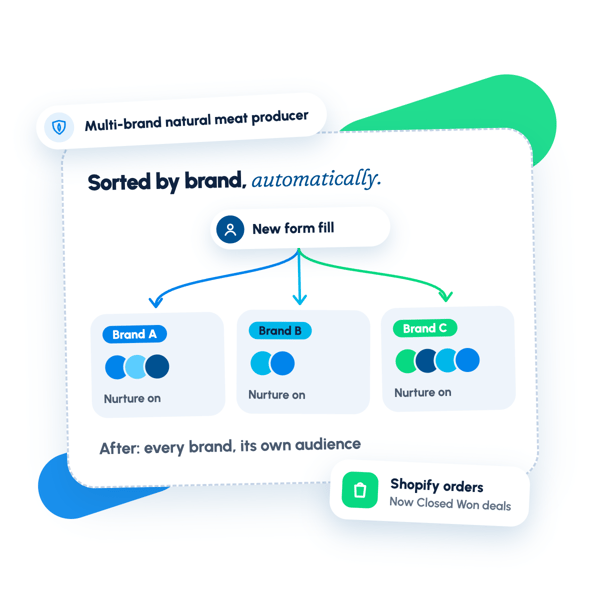
The client's HubSpot environment is now structured around brand-level segmentation, enabling targeted marketing across their multiple brands. A Brand property (multi-checkbox) auto-populates on contact and company records via form-submission workflows, replacing ad-hoc tracking methods. Revenue attribution from Shopify to HubSpot is now operational through a Deal-creation workflow that transforms fulfilled Orders into Closed Won Deals, allowing marketing-driven ecommerce revenue to be reported alongside traditional pipeline.
Custom dashboards and reports–including a Customer Journey report and KPI tiles–now provide scannable visibility into performance by brand and channel. The team can execute brand-specific campaigns, measure email-to-purchase conversion, and operate from a single, dependable source of truth instead of fragmented lists and spreadsheets.
Want results like these?
Tell us where your revenue engine is stuck — we'll map the fix in one call.