
Title agents tracked from qualification to close
The challenge they faced
A title insurance underwriter was managing agent relationships, prospect tracking, and performance data across fragmented systems with no centralized CRM. The team lacked visibility into the sales pipeline, struggled to track agent lifecycle stages from prospect through conversion to active status, and had no unified way to run marketing campaigns or forecast revenue. When the organization decided to modernize its operations and improve agent acquisition and retention, leadership mandated a CRM implementation with a tight deadline, making it critical to move quickly without sacrificing accuracy in how data structured the business.
The strategy we mapped
The team needed to move from fragmented systems into a unified HubSpot environment that would serve both sales and marketing operations. We began by mapping the current sales process to understand where friction existed and how HubSpot's tools could streamline qualification, deal progression, and reporting. This discovery phase was essential because the technical build had to reflect actual business workflows, not generic best practices.
Once the sales process strategy was locked, we designed the database architecture for both sales and marketing functions in parallel. The data model had to support accurate pipeline reporting, lead scoring, and campaign attribution from day one. We also established compliance foundations early, configuring consent management and privacy settings so the portal would be built on a clean, legally sound data foundation.
The technical infrastructure then came together in phases: sales tools first (email integration, calling, scheduling), followed by marketing fundamentals (tracking code, brand kit, email authentication). This sequencing meant that as foundational systems stabilized, we could layer in automation, workflows, and campaign orchestration. Training and office hours ran throughout the ramp-up period to ensure the team could translate the new platform into daily habit rather than stalling on technical friction.
The solutions we executed
We architected the sales database by defining custom properties for agents and deals, establishing data standards that would feed accurate pipeline reporting and enable stage-gate enforcement. The sales process was then configured as a structured workflow in HubSpot, with deal pipelines, automation rules, and activity logging all wired to eliminate manual data entry. We integrated email and calendar systems to sync activities automatically, set up the native calling tool, and configured meeting scheduling links to remove friction from the booking process.
For marketing, we installed the tracking code and connected the domain to ensure visitor attribution, configured a centralized brand kit so all assets stayed on-brand, and set up email authentication via DKIM. We then built the lead capture architecture, defining how contacts would flow into the system from forms and campaigns, and created custom properties to tag lead source and campaign attribution. A subscription preference center with multiple opt-in segments was configured to give contacts control over communication types and reduce unsubscribe rates.
We built automation and reporting infrastructure by creating deal-based workflows to move leads through the sales process, setting up email automation for marketing campaigns, and constructing five centralized dashboards with custom reports tracking revenue, volume, engagement, forecasting, and campaign ROI. Compliance and consent management were configured with global GDPR settings, double opt-in protocols, and automated compliance workflows. Custom permission sets were created to align user access with team roles and responsibilities, and we provided guidance on data governance best practices.
The team received comprehensive training across two tracks. Sales training covered CRM fundamentals, pipeline management, activity logging, and using HubSpot to increase deal velocity. Marketing training covered the full platform lifecycle including the CRM and properties structure, segments, email and workflow tools, campaigns, forms, social tracking, and platform best practices. Post-launch office hours ran for four weeks as live drop-in sessions, allowing team members to troubleshoot real-world challenges and refine workflows with direct access to a technical expert.
What changed after the engagement.
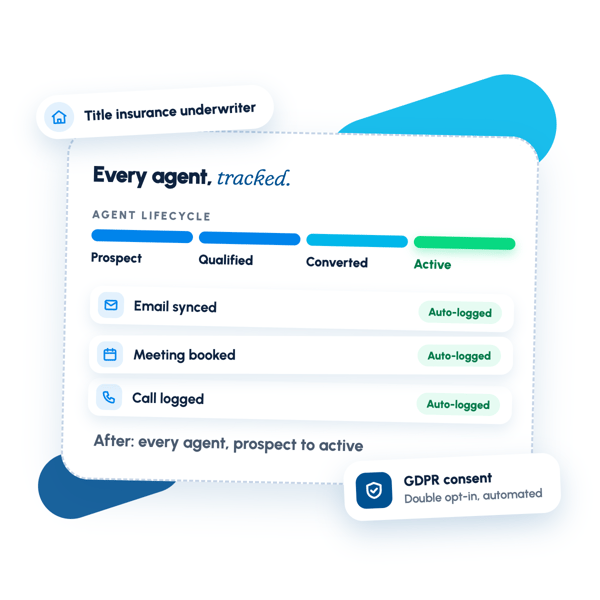
The client's CRM is now a unified, compliant platform for managing agent prospects and lifecycle stages. Sales and marketing workflows run through HubSpot's native pipeline with automated lead assignment, stage progression, and activity logging, replacing manual spreadsheets and email-based tracking. The database is clean and correctly structured with custom properties, validated associations, and permission controls that enable secure access and data governance.
Real-time synchronization between True and HubSpot keeps agent and prospect records current, while automated compliance workflows enforce GDPR consent and opt-out management. The team can now scale agent acquisition confidently with centralized visibility into pipeline health, prospect conversion stages, and rep performance through dashboards and reporting.
Want results like these?
Tell us where your revenue engine is stuck — we'll map the fix in one call.