
Feed orders, sales and service in one CRM
The challenge they faced
As a nutritional feeds manufacturer, the team struggled to centralize customer interactions across sales and service functions. Sales representatives lacked visibility into recent customer service issues before visits, while the service team's expanding responsibilities risked dropped communications. Multiple disconnected systems–email, spreadsheets, and custom platforms–created manual work and duplicate data entry. The team needed HubSpot to unify customer information, enable cross-departmental awareness, and streamline service ticket routing as they scaled operations.
With legacy systems difficult to integrate and new responsibilities coming online for the service team, they recognised that they needed a partner to implement the platform correctly from the start, rather than attempting onboarding alone. That recognition led them to Bluleadz.
The strategy we mapped
We began by mapping how the team's two sales channels and support operations needed to work together, then prioritized the setup of two distinct sales pipelines–Commercial and Retail–before automating notifications and routing. That sequencing ensured reps had a clear, usable workspace first, and allowed the service team to plug in later as their support inbox came online. We also deferred advanced features like customer portals and knowledge bases to a later phase, letting the team focus on core ticket handling and cross-departmental visibility from day one.
Throughout implementation we tracked usage patterns from the activity logs and adjusted dashboards, workflows, and permissions based on live feedback. The team worked through email integrations, phone routing, and auto-assignment logic in parallel with sales enablement, so by project close, both functions had working ticket and deal creation, active automations, and operational dashboards.
The solutions we executed
We built separate Commercial and Retail pipelines, each with tailored stages, custom properties, and automations. The Commercial pipeline focuses on custom specifications and order frequency, while the Retail pipeline captures breed, pricing tier, and freight method to reflect how these channels transact. Both feed into a unified Sales dashboard showing closed-won volume by rep and pipeline, deal creation trends, and activity metrics, all filtered by month so the team can track performance and engagement.
We set up a Support pipeline with two filtered views–one for feed orders and one for customer support requests–so the team sees only relevant tickets in their workspace. The auto-assignment workflow routes feed order tickets randomly to two designated team members and other tickets to a third, triggered as soon as email and phone channels connect. A Support dashboard tracks ticket volume, closure rates, top customers by issue type, and resolution actions, with quick filters to shift between 30-day and year-to-date views.
Email and phone integration enables ticket creation directly from customer inbound channels. As email connects, the group support inbox auto-creates tickets; phone routing is configured to feed calls into the ticket pipeline when the HubSpot number receives inbound calls. We also documented pipeline structure, stage definitions, and associated workflows so the team can maintain and adjust configurations independently.
Across both functions, we built Sales Workspace for centralized task execution and cross-functional visibility: reps see their own deal tasks and calls, managers see all-pipeline health, and operations can spot bottlenecks and closed-won freight details in a shared feed. We also trained the team on the HubSpot Gmail and Outlook extensions for inbox-native deal creation and email logging, and prepared a repeatable template and walkthrough for importing trade show leads so future events can populate contacts and deals in one batch.
What changed after the engagement.
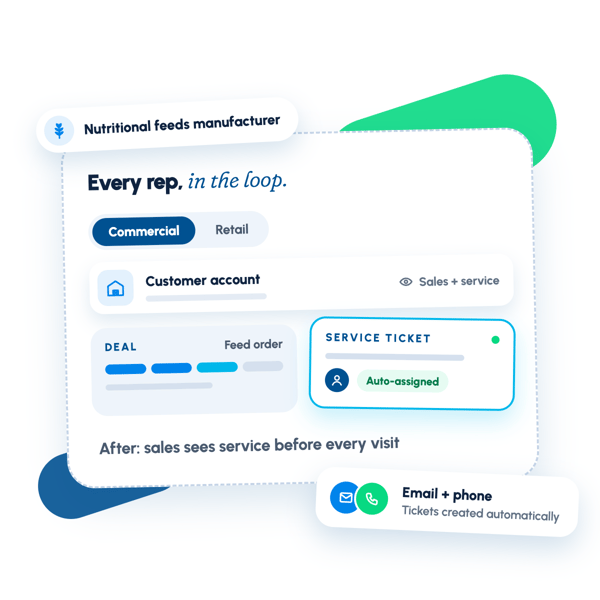
The client's sales and service operations now run through HubSpot instead of disconnected spreadsheets and email inboxes. Sales representatives can see recent customer service issues before visits, service tickets route automatically to the correct team member, and cross-departmental visibility is built into daily workflows. Customer data is centralized, dependable, and accessible to both teams, eliminating duplicate entry and enabling faster response to customer needs as the organization scales.
Want results like these?
Tell us where your revenue engine is stuck — we'll map the fix in one call.