
Buyer-centric content strategy for technical decision makers
The challenge they faced
As a vendor-neutral network solutions provider, the team was struggling with manual, fragmented prospecting and lacked a unified approach to reaching its target buyers. The organization needed to move beyond product-focused messaging to position itself as a consultative alternative in a market dominated by established vendors. Without a modern digital presence or structured go-to-market strategy, the team was missing opportunities to capture demand from network architects, CTOs, and operations leaders who were actively searching for alternatives to traditional vendor lock-in.
The strategy we mapped
The team needed to position itself as a consultative alternative within a market dominated by established vendors. Rather than lead with product specifications, we structured the work around the buyer's journey: first understanding what mattered most to the three personas that drove purchasing decisions, then building content strategy and messaging architecture that addressed their specific concerns.
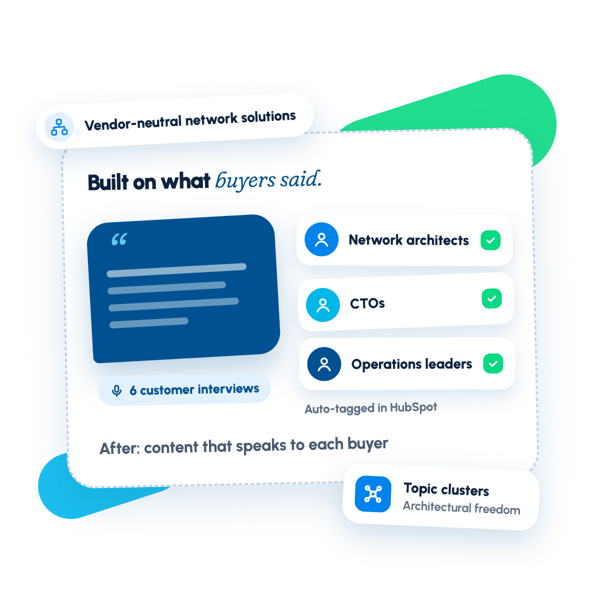
We began with customer discovery interviews across network architects, CTOs, and operations leaders to understand their priorities, pain points, and what they valued in vendors. This research formed the foundation for persona definition and keyword strategy. We then mapped high-intent search queries that revealed gaps between how the team was currently positioned and where buyers were looking for solutions, particularly around topics like legacy hardware end-of-life and open networking alternatives.
With this understanding in place, we developed a topic cluster strategy centered on the highest-ROI themes: architectural freedom and disaggregated networking. This allowed us to create a cohesive content program where pillar posts addressed primary topics in depth, supporting posts filled gaps in the cluster, and all content was anchored to the buyer personas and keywords that mattered most to each audience segment.
The solutions we executed
We conducted six customer interviews across the three core personas to understand their objectives, preferences, and decision criteria. This voice-of-the-customer research informed everything that followed. We also facilitated a workshop with internal stakeholders to define the personas in detail, mapping out their technical priorities and business concerns. We then integrated these three personas into HubSpot and set up automated assignment logic so that contacts would be tagged based on their engagement patterns and form responses, enabling more targeted outreach.
On the keyword and content strategy side, we performed targeted research to identify high-intent technical queries and gaps between the team's current positioning and where buyers were searching, with particular focus on replacement pipeline triggers. We developed 20 high-authority blog post outlines using HubSpot's SEO tools, each grounded in research and mapped to the topic cluster. We then wrote two pillar posts of approximately 3,000 words each that addressed the primary topics comprehensively and provided a foundation for the supporting content.
We created first drafts for 18 supporting blog posts using AI-assisted techniques with structured prompts, then refined each one by adding depth, original analysis, internal and external linking, optimized imagery with alt-text, and proper attribution within the topic cluster structure in HubSpot. All content was published to the website through the HubSpot CMS. Finally, we established an ongoing managed services subscription that included a kickoff discovery call, biweekly strategy sessions, and monthly reporting, providing the team with capacity for continued content development and platform optimization.
What changed after the engagement.
The client now has a well-researched, buyer-centric content strategy grounded in voice-of-customer interviews across three core personas: network architects, CTOs, and operations leaders. Two comprehensive pillar posts and supporting blog content have been created and published through the HubSpot CMS, establishing topical authority around architectural freedom and disaggregated networking–the highest-ROI themes for reaching prospects actively seeking alternatives to traditional vendor lock-in. The three personas are now integrated into HubSpot with automated assignment logic that tags contacts based on engagement patterns and form responses, enabling more targeted outreach and personalized messaging that resonates with each buyer's specific priorities and decision criteria.
Want results like these?
Tell us where your revenue engine is stuck — we'll map the fix in one call.