
Donor, shop and volunteer data in one CRM
The challenge they faced
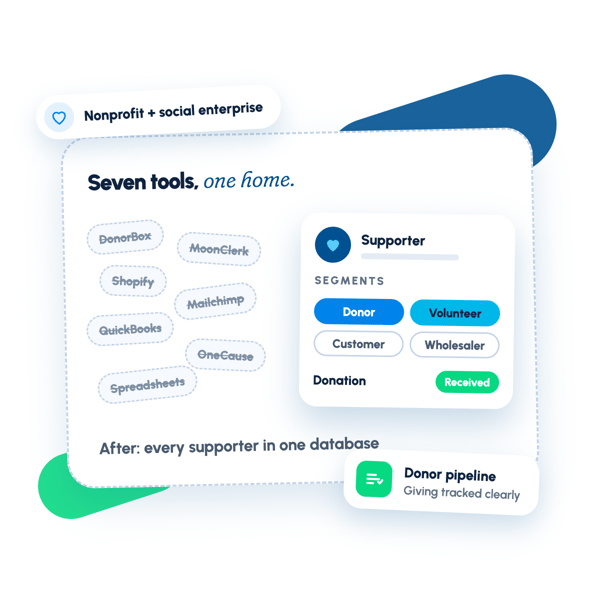
A nonprofit supporting survivors of human trafficking, which also runs a jewelry social enterprise, kept its supporter data in DonorBox, MoonClerk, Shopify, Mailchimp, QuickBooks, OneCause and wholesaler spreadsheets. It ran two websites, had no defined process for tracking donations and sales, and needed help both setting up HubSpot and running it.
The strategy we mapped
Consolidation came first: one CRM for every donor, customer, volunteer and wholesaler. Before migrating, we audited the existing contacts and dropped the disengaged ones, such as inactive Shopify records, so the new database started clean. Donation tracking was then built into Sales Hub, and training followed so the team could run the system across both websites.
The solutions we executed
A clean, consolidated database. We mapped properties across DonorBox, Shopify, Mailchimp and the trade show, wholesaler and volunteer lists, migrated the engaged contacts and segmented them into donors, volunteers, customers and wholesalers.
A donor pipeline. We set up Sales Hub with a donor pipeline and connected DonorBox to HubSpot through Zapier, with a donation landing page feeding the same database.
Tools the team can run. We built email templates with customizable modules and trained the team on segmentation, workflows, email, lead capture, blogging and reporting.
What changed after the engagement.
The organization now tracks donors, customers, volunteers and wholesalers in one HubSpot database instead of seven tools and a set of spreadsheets. Donations flow into a defined pipeline, and the team has the templates, segments and training to run marketing and fundraising from one place across both of its websites.
Want results like these?
Tell us where your revenue engine is stuck — we'll map the fix in one call.